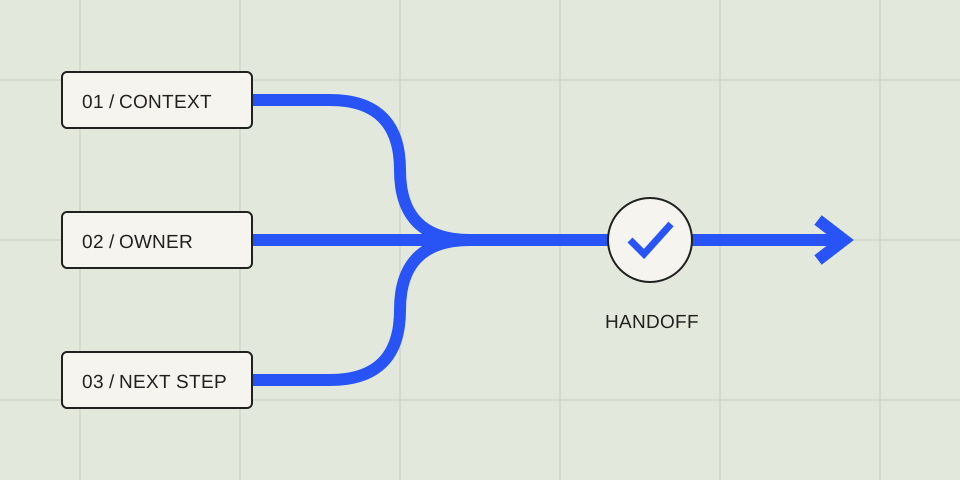
The quiet gap between done and ready.
A task can be finished and still be impossible for the next person to begin.
The document exists, but no one knows which version is approved. The issue is closed, but support has not seen the rollout plan. The contract is signed, but the kickoff has no owner. Each person has completed their part. The work still isn’t moving.
This is a coordination problem with a deceptively small shape. It often looks like a message waiting for an answer. Underneath, one of three things is missing: context, ownership, or a clear next action.
Five questions before you pass it forward.
-
What changed?
Describe the decision or event that makes the next step possible. “Ready for review” is more useful when it names the exact work that is ready.
-
Who has it now?
Name one accountable person. A team can help; one person should know that a response belongs to them.
-
What do they need?
Attach the source, constraints, and open questions. Don’t make the receiver reconstruct the conversation.
-
What happens next?
State an action with an outcome. “Review the brief and confirm a kickoff owner” is easier to begin than “take a look.”
-
How will we know it landed?
Choose an acknowledgment. A message delivered is not the same as responsibility accepted.
Borrow this checklist.
Before sending the handoff, make sure you can answer each item:
Start smaller than a process overhaul.
Choose one handoff that regularly creates a question. Write down the next person’s questions. Make those answers part of the handoff. Test the change with a real person before you automate it.
A useful workflow is a shared agreement first. Software can make the agreement easier to repeat.