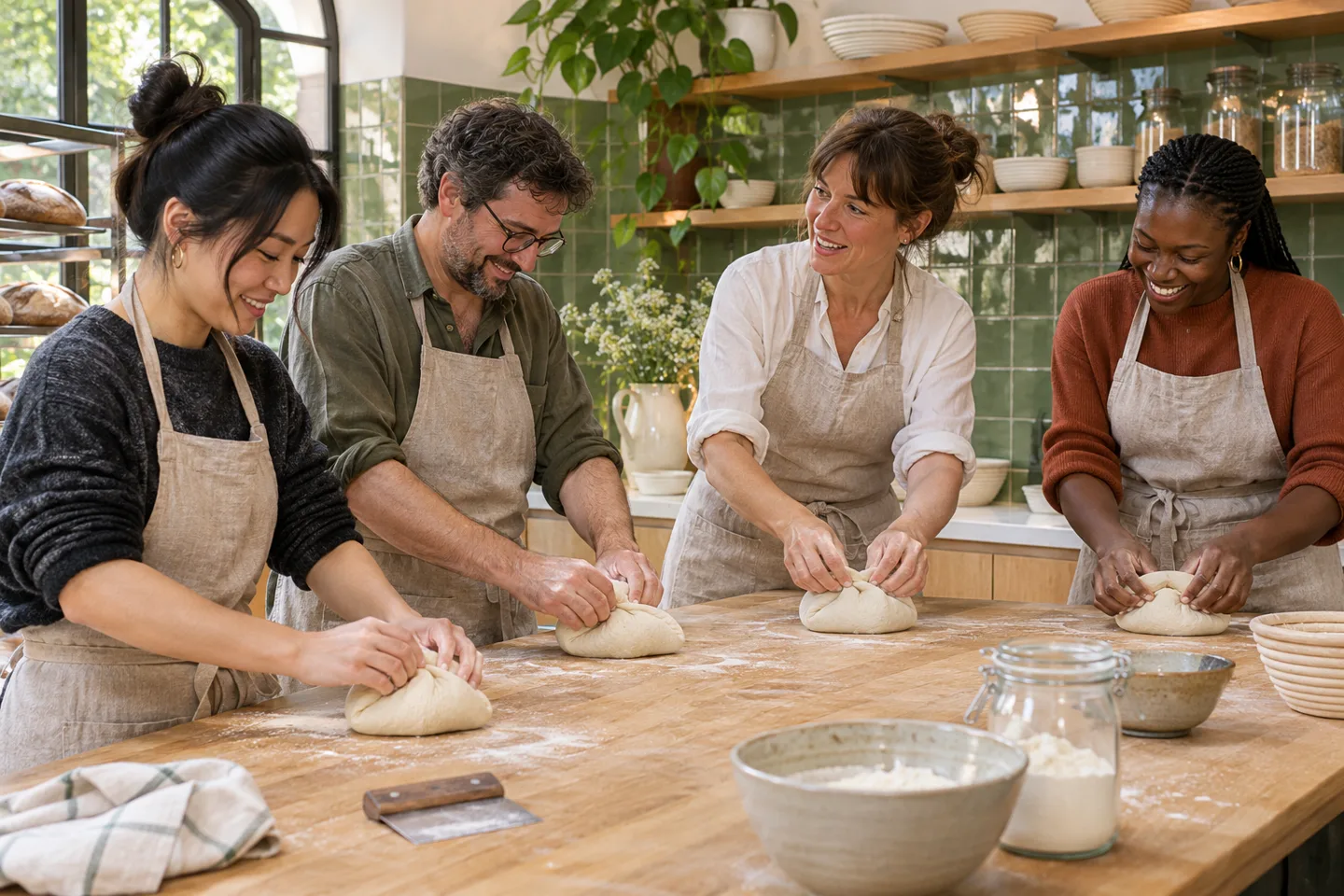
A formula might say “leave for two hours”. Your flour, starter and room may have other ideas. Treat that number as a place to begin looking.
Look for change, not perfection
Mark the starting level of the dough in a clear container. Watch for expansion, a smoother surface and small bubbles at the edge. Compare what you see with how it looked when you mixed it.
Feel how it resists
A gentle fold can tell you whether dough is still loose or beginning to hold itself together. If it resists strongly, give it time to relax. More force rarely makes a useful observation.
Keep one small note
Write down the room conditions, flour blend and what the dough looked like before shaping. Next time, change one thing and compare the outcome. Your own notes become more useful than a universal clock.
These are learning observations, not food-safety tests. Follow safe food handling and your equipment’s instructions.